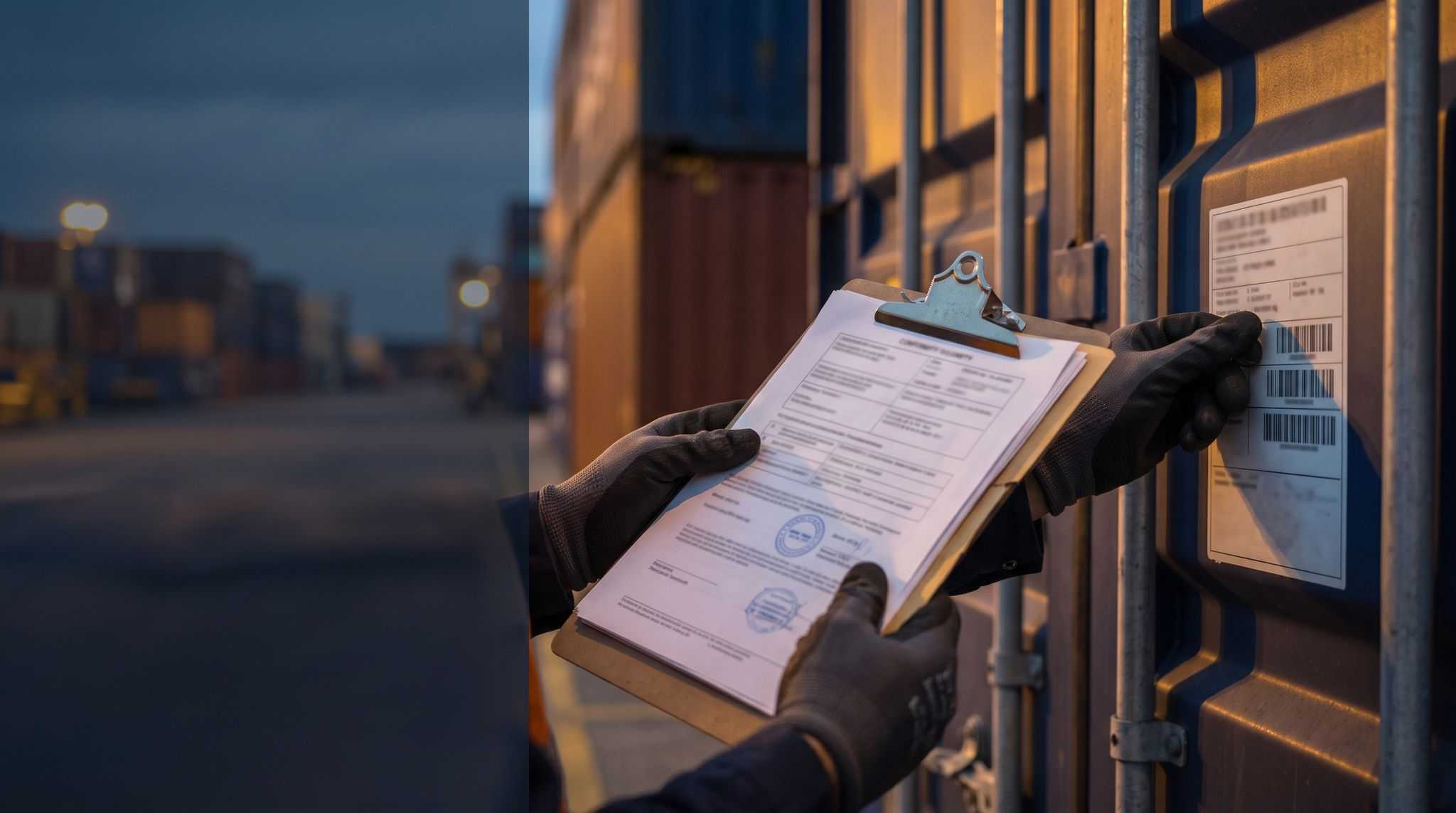
SABER · PCoC · SCoC
SABER registration and certification, handled end to end
SABER is SASO's online platform where every product certificate and shipment certificate for Saudi imports is registered. We handle your SABER registration and certification end to end, and Safe Hands, a licensed customs broker, then clears the shipment on FASAH.
- SABER end to end
- Licensed customs broker
- Saudi CR holds the account
Have a Saudi CR? Customs Clearance Quote. No Saudi company? Importer of Record (IOR) Quote.
- Licensed customs brokerZATCA customs clearance
- CR 1010908989Riyadh · Unified National Number 7032803814
- TGA 42/00008120TGA Freight Forwarder & Broker Licence
- ISO 9001:2015 · ISO 45001:2018ISO certification
SABER in one minute
From 1 October 2025 the SABER shipment certificate must be issued before the customs declaration is filed (SABER FAQ). Every consumer or industrial product goes through SABER: regulated products with a Product Conformity Certificate, non-regulated products with registration and an importer self-declaration, and every shipment then with its own shipment certificate.
Every commercial shipment into Saudi Arabia needs a shipment certificate (SCoC) issued on SABER; since 1 October 2025 this applies to every import, regulated or not, before the customs declaration. If your product falls under a SASO technical regulation, it also needs a product certificate (PCoC) first. Products outside any technical regulation go through product registration and an importer self-declaration instead. The 12-digit HS code of your product decides which route applies.
We handle your SABER registration and certification end to end: we read your HS line, register the products, manage the certificate applications with a SASO-accepted conformity body, obtain the shipment certificate for each consignment and link it to the customs declaration.
Market ranges this month
Market range: a 40 ft container from China to Jeddah costs about USD 8,500–10,500 (SAR 31,900–39,400) this month, port to port. To get our price, click to quote.
Click to quoteMarket range: air freight from China to Riyadh costs about USD 5.50–7.50 per kg (SAR 20.60–28.10) this month for shipments of 100 kg and more, airport to airport. To get our price, click to quote.
Click to quoteMarket range: a full truck from Dubai to Riyadh costs about AED 4,500–8,000 (SAR 4,600–8,200), trucking only. To get our price, click to quote.
Click to quote
Check Your 12-Digit HS Code, SABER Status, Regulator Approvals & Tariff Duty
Search by 4, 6, 8, or 12-digit HS code or product name in English or Arabic to inspect the ZATCA tariff duty rate, 15% VAT, excise tier, SABER conformity track, government authority requirements, and GAFT trade remedies.
Need a SABER certificate or an HS code check for your shipment?
Send us the commercial invoice. We check the 12-digit tariff codes, map the SABER certificates each product needs (PCoC and SCoC) and price the customs clearance for your shipment.
How to check a 12-digit HS code for SABER
Check the full 12-digit code: Saudi Arabia applies the GCC integrated customs tariff at the 12-digit level since 1 January 2025. Search the code in ZATCA's Integrated Customs Tariff and open its Procedures, then check SABER's HS-code list or its non-regulated product search. A line under a technical regulation needs a PCoC plus an SCoC; a non-regulated line needs registration, a self-declaration and an SCoC. Our Customs Clearance Quote suggests the code and lists SABER and other approvals for each line.
Source: ZATCA, Integrated Tariffs (12-digit level from 1 January 2025) (checked 19 Oct 2026)
PCoC and SCoC: the two SABER certificates
Official SABER and SASO figures; SABER fees checked on saber.sa on 15 October 2026.
- Product certificate (PCoC)Needed for products under a SASO technical regulation. Issued by the conformity body you select and registered on SABER. Valid for one year; SABER fee SAR 500 excluding VAT per certificate (SASO-equivalent certificates are registered free).(SABER FAQs)
- Shipment certificate (SCoC)Issued per shipment for imported commercial products in 1–2 working days; SABER fee SAR 350 excluding VAT.(SABER: shipment certificate for imported commercial products)
- Non-regulated productsNo technical regulation applies: product registration, then an importer self-declaration with a pledge, then the shipment certificate for each shipment.(SABER: non-regulated products)
- Newly regulated HS codes (8 Nov 2026 notice)When SABER moves an HS code from non-regulated to regulated, a 30-day transition notice applies before the PCoC becomes mandatory.(SABER HS-code list by technical regulation)
- Contact officer delegationImporters can delegate our team on their SABER account as 'Conformity And Shipment Requests Manager' (up to invoice stage) or 'Account Manager' (full process); certificates are issued in the importer's name.(SABER platform (SASO))
- Foreign certificatesConformity certificates from bodies outside the Kingdom count only if the issuing body is on SASO's accepted list.(SABER FAQs)
- Link to customsSABER is linked to FASAH, ZATCA's customs platform; SASO set the link to be complete on 1 Jul 2020.(SABER platform (SASO))
Conformity-body testing and audit fees are separate; we quote them per HS code.
Certificate routes on SABER, by tariff line
The 12-digit tariff line decides which route your product takes. These are the routes SABER publishes, with the official fees.
| Route | Applies to | Official fee | Scope / timing |
|---|---|---|---|
| Product certificate (PCoC, Type 1a) | Products under a SASO technical regulation | SABER fee SAR 500 + VAT per certificate (SASO-equivalent certificates registered free); technical file study capped at SAR 2,000; testing separate | 1 year (per origin, non-renewable); about one week after file acceptance |
| Shipment certificate (SCoC) | Every import since 1 October 2025, regulated or not | SABER fee SAR 350 + VAT per conformity body per shipment | One shipment; issued in 1–2 working days |
| Non-regulated route | Products outside every technical regulation (2,657 codes on the SABER list) | Registration and importer self-declaration, no PCoC fee; SCoC as above | Per shipment |
| Saudi Quality Mark | 176 tariff lines that accept only the Quality Mark | SASO licence fee per its service catalogue | Per licence term |
| IECEE national recognition | About 200 lines: phones, power banks, lighting, TVs, PCs, cables, small appliances, pumps up to 5 hp, breakers, small PV | Needs a CB test report and CB certificate; plugs to SASO 2203 | Per certificate |
| COC-CST | 54 lines of communications and IT devices (e.g. 8517, 8525, 8526, 8471) under the SASO Communications and IT Devices regulation; CST licensing and EMF rules still apply | Type 1a certificate | 1 year |
Show all 9 rows
| Route | Applies to | Official fee | Scope / timing |
|---|---|---|---|
| SASOEX | 17 lines of equipment for explosive atmospheres | Type 1a certificate | 1 year |
| Metrology model approval | 5 lines: fuel pumps, scales, water meters and electricity meters | Per model | Per approval |
| Energy-efficiency label | AC (SASO 2663, 2874), fridges and freezers (2892), washers (2885), lighting (2870, 2902, 2927), motors (2893), dryers (2883), dishwashers (3029), tyres (2857), new light vehicles (2847); updated AC requirements mandatory from 1 December 2026 | SASO registration: SAR 6,000 for small AC, fridges and freezers, washers, dryers and water heaters; SAR 5,500 large AC; SAR 2,000 lighting; motors SAR 1,000 (IE4) or 1,500 (IE3) per model; SAR 2,000 tyres; SAR 5,000 new light vehicles; class-based additional fees apply | Per model registration |
Line counts are from the SABER HS-code list of August 2026; the live tariff line decides. Energy-label fees: SASO energy-efficiency products services cost, read 15 October 2026. Conformity-body fees are separate and quoted per HS code.
Is your product regulated?
The 12-digit tariff line decides. Its "Required Procedures" in the ZATCA Integrated Tariff name the approval the goods need, and SABER publishes its HS-code list by technical regulation.
- Regulated (PCoC + SCoC): products under a SASO technical regulation, such as communications and IT devices, which need a Type 1a certificate (ISO/IEC 17067) from a SASO-accepted body plus a technical file.
- Non-regulated (registration + self-declaration + SCoC): products outside every technical regulation.
- Not SABER at all: food is cleared by SFDA, and cosmetics need SFDA registration and SFDA clearance before arrival.
- A CE, UKCA or UL mark is not a SABER certificate. Regulated products still need a PCoC from a SASO-accepted conformity body; your existing test reports may reduce the testing needed.
Sources: ZATCA Integrated Tariff; SABER HS-code list; SASO Communications and IT Devices regulation (Art 6); SFDA food clearance requirements; SABER FAQs. Checked 10 Oct 2026.
New from 1 October 2026: supplier name and CR on the product
Under a SASO circular based on the Product Safety Law, products under ten technical regulations must carry the supplier's name (the importer or local manufacturer) and its commercial registration number from 1 October 2026: LPG tankers, watercraft, tanks, trailers and semi-trailers, electric self-balancing boards, simple pressure vessels, child restraint systems and strollers, hydraulic connections (Building Materials Part 3), solar PV systems and electric lifts. SASO checks compliance through SABER data.
When Safe Hands is your Importer of Record, it is our name and CR that go on the product, so the label is planned with your factory before loading.
What your supplier sends us
For a regulated product (the exact technical file depends on the regulation):
- Test reports to the regulation's standards, from an ISO/IEC 17025 laboratory
- The supplier's declaration of conformity and the technical file
- Label images and product photos, and the list of models
- The supplier's HS code with a full product description
- For each shipment: invoice number, date, value, currency, supplier, models and quantities
Who holds the SABER account?
SABER says the party that must register is the importer or manufacturer holding a Saudi commercial registration, or the local factory. A foreign exporter therefore cannot hold the account. When Safe Hands is your Importer of Record, the account and certificates sit with us as the importer named on the customs declaration. When you import under your own Saudi CR, the account is yours and we handle the SABER work on it for you.
Why SABER timing matters at the port
Since 29 October 2025, the manifest and customs declaration must be filed before goods arrive at Saudi seaports. A shipment without its SCoC cannot complete that declaration, and the container waits at the port while carrier demurrage and storage charges run. We prepare the SABER certificates before the vessel sails, so the declaration is ready on arrival.
We lodge the FASAH declaration at least 48 hours before arrival, so the SCoC must exist before that.

Shipment at the port without SABER: what happens and what we do
The declaration cannot be completed
Since 29 October 2025 the FASAH declaration must be filed before arrival at Saudi seaports, and since 1 October 2025 it needs the SCoC. Without it the container waits at the port while the shipping line's demurrage and the port's storage charges run.We read the tariff line
The 12-digit HS code confirms whether the product is regulated (PCoC first), non-regulated (self-declaration) or outside SABER (SFDA and others).PCoC already exists
We request the SCoC on SABER against the invoice and bill of lading; SABER issues it in 1–2 working days once the data match.No PCoC yet
For a regulated product we open the PCoC with your test reports from an ISO/IEC 17025 laboratory; where reports are missing, testing is arranged and quoted per HS code. For a non-regulated product we file the self-declaration and the SCoC.Declaration the same day
We lodge the FASAH declaration as soon as the SCoC is issued and release the container; for future shipments the declaration goes in at least 48 hours before arrival.
Container already waiting?
Send us the HS code, the invoice and the bill of lading, and we confirm the SABER route from the tariff line.
Sources
- SABER platform (SASO)
- SABER FAQs
- SABER services
- SABER: shipment certificate for imported commercial products
- SABER: non-regulated products
- SASO service catalogue (PCoC fee and validity)
- SABER HS-code list by technical regulation
- ZATCA Integrated Tariff search
- SASO circular: supplier name and CR on the product
- SASO Technical Regulation for Communications and IT Devices
- ZATCA: mandatory pre-arrival customs declaration (from 29 Oct 2025)
- SFDA: food clearance requirements
- Saudi Press Agency: SABER shipment certificate before every import declaration from 1 Oct 2025
- FASAH 24-hour clearance programme (declaration at least 48 hours before arrival)
- SASO energy-efficiency label
- SASO energy-efficiency products services cost (PDF)
- SASO: IECEE national recognition
Official SABER, SASO, ZATCA and SFDA pages, checked 10 October 2026; SABER fees, the SCoC rule and energy-label fees re-checked 15 October 2026. The requirements for your product are confirmed when we review your HS code.
Frequently Asked Questions
How much does a 40 ft container from China to Jeddah cost?
Market range: a 40 ft container from China to Jeddah costs about USD 8,500–10,500 (SAR 31,900–39,400) this month, port to port. To get our price, click to quote.
How much does air freight from China to Riyadh cost per kg?
Market range: air freight from China to Riyadh costs about USD 5.50–7.50 per kg (SAR 20.60–28.10) this month for shipments of 100 kg and more, airport to airport. To get our price, click to quote.
How much does a full truck from Dubai to Riyadh cost?
Market range: a full truck from Dubai to Riyadh costs about AED 4,500–8,000 (SAR 4,600–8,200), trucking only. To get our price, click to quote.
Do goods from China need a SABER certificate for Saudi Arabia?
Yes. Commercial imports need a SABER shipment certificate (SCoC) for each shipment, and regulated products also need a product certificate (PCoC) per model from a SASO-accepted conformity body; a CE mark is not a SABER certificate. The SABER account is held by the Saudi importer. Safe Hands Shipping Line handles SABER registration and certification end to end and checks each HS code before loading.
How do I import from China to Saudi Arabia, step by step?
Four steps. Confirm each product's 12-digit Saudi tariff line and its approvals, such as SABER certificates or SFDA. Book a full container from the Chinese port to Jeddah Islamic Port or King Abdullah Port. Safe Hands Shipping Line, a licensed customs broker, lodges the FASAH declaration at least 48 hours before arrival and pays duty and 15% VAT. Then the goods are delivered to your site or stored in Riyadh. Start with the instant sea quote.
More questions (21)
What does customs clearance in Saudi Arabia cost, and what are the steps?
The official charges are customs duty set by the goods' 12-digit tariff line (the GCC general rate is 5%), 15% import VAT and the ZATCA customs service fee of 0.15% of the CIF value, minimum SAR 15 and maximum SAR 500 per declaration. The steps: SABER shipment certificate, FASAH declaration at least 48 hours before arrival, inspection, payment, delivery order and delivery. Safe Hands Shipping Line gives an instant estimate in the Customs Clearance Quote.
Do you issue SABER certificates?
We handle your SABER registration and certification end to end: product registration, the PCoC application with a SASO-accepted conformity body, and the shipment certificate for each consignment, linked to your customs declaration.
What is the difference between a PCoC and an SCoC?
The PCoC certifies the product against its technical regulation and is valid for one year. The SCoC covers one shipment and is issued in 1–2 working days.
How do I know if my product needs a PCoC?
From its 12-digit HS code: the tariff line's required procedures and SABER's HS-code list show whether a technical regulation applies. Send us the HS code and description and we confirm the route before you ship.
My product has CE marking. Is that enough?
No. A CE, UKCA or UL mark is not a SABER certificate. A regulated product still needs a PCoC from a SASO-accepted conformity body, although your existing test reports may reduce the testing needed.
Can a foreign exporter open a SABER account?
No. SABER registration is for importers and manufacturers holding a Saudi commercial registration and for local factories. As your Importer of Record, Safe Hands holds the account as the importer named on the customs declaration.
What does SABER cost?
SABER's own fees (saber.sa, checked 15 October 2026) are SAR 500 for a PCoC (valid one year) and SAR 350 for each SCoC, excluding VAT. Conformity-body testing and audit fees are separate; we quote them per HS code, and the Customs Clearance Quote shows the SABER fees for your lines.
How long does a PCoC take?
Timing is set by the certification body, as per regulation. SABER issues the certificate as soon as the requirements are complete. The testing and audit before that vary by product and conformity body, so we give you a date once we see your HS code and test reports.
Does the SCoC cover more than one shipment?
The SCoC is issued per shipment. We handle one for each consignment and link it to that customs declaration.
Are food and cosmetics registered on SABER?
No. Food is cleared by SFDA, and cosmetics need SFDA registration and SFDA clearance before arrival. Pharmaceutical and medical products need SFDA registration and an SFDA-licensed importer; we clear them and store them ourselves in Riyadh.
Do wireless devices need a separate CST approval?
Under SASO's Communications and IT Devices regulation, wireless and IT devices are certified through SABER with a Type 1a certificate from a SASO-accepted body and a technical file listing the radio bands and maximum power. CST's own licensing and registration rules for telecom equipment still apply alongside the SABER certificate; we confirm both from the HS code.
What changes on 1 October 2026?
Products under ten SASO technical regulations must carry the supplier's name and commercial registration number. When we are your Importer of Record, that is our name and CR, so we agree the label with your factory before loading.
I have a Saudi CR. Can you still handle SABER for me?
Yes. The SABER account stays in your name and we handle the registration and certificates on it, then clear the shipment as a licensed customs broker. Start with the Customs Clearance Quote.
When must the SABER shipment certificate be issued relative to the customs declaration?
Before the customs declaration. From 1 October 2025 the SABER shipment certificate must be issued before the declaration is filed. Every consumer or industrial product goes through SABER: regulated products with a Product Conformity Certificate, non-regulated products with registration and an importer self-declaration, and every shipment then needs its own shipment certificate. Source: SABER FAQ.
How long does a SABER certificate take?
The importer self-declaration is issued the same day, and a shipment certificate usually within 2 working days. You can check whether your HS code is regulated on SABER's public HS-code list, and on 8 November 2026 SABER published a notice of HS codes that become regulated within 30 days. The certificates name the importer; the importer can give our staff a contact-officer role in its own SABER account, so we prepare and file the requests. Sources: SABER importer pages and FAQ.
Where is the official SABER HS code list?
On saber.sa, on the HS codes page (saber.sa/home/hscodes). The current download is the August 2026 list, and the page filters codes by technical regulation, by required certificate and by additional requirements. SABER updates the list regularly, so we check the live version for each new product.
How do I check on SABER whether my HS code is non-regulated?
Use SABER's non-regulated products page: search by customs code or keyword, or browse the list, which shows full 12-digit codes such as 760120000000 for aluminium alloys. If your line is listed, the route is product registration, an importer self-declaration with a pledge, then a shipment certificate for each shipment.
Is there a separate SABER tariff, or is it the ZATCA tariff?
One tariff applies: the GCC integrated customs tariff at the 12-digit level, in force since 1 January 2025 under Minister of Finance Decision 2-88-1446, with amendments from 1 June 2025. SABER's lists use the same 12-digit codes. A shorter code on a supplier invoice is a starting point; the route is confirmed on the full 12-digit line.
How do I check an HS code in the ZATCA Integrated Tariff?
Use ZATCA's free Integrated Customs Tariff Inquiry: search by word, HS heading or HS code, or browse by section and chapter. Open the line's details and click Procedures to see the requirements attached to that tariff line. ZATCA's import instructions point importers to this search, or to their customs broker.
Can your Customs Clearance Quote find my HS code and SABER requirement?
Yes. Search your product or type the HS code from your supplier's invoice: the quote suggests the HS code, confirmed by our customs team, and lists the approvals each line needs, including SABER and SFDA, for up to 30 product lines. We handle your SABER registration and certification end to end.
My shipment has several HS codes. Does each line get its own SABER route?
Yes. The route is read per 12-digit line, so one invoice can mix regulated lines (PCoC plus SCoC), non-regulated lines (registration, self-declaration and SCoC) and lines outside SABER, such as food cleared by SFDA. We map every line before the vessel sails and link the certificates to the customs declaration.
Our credentials
- Licensed customs broker
- ZATCA customs clearance
- Commercial Registration
- 1010908989 (Riyadh) · Unified National Number 7032803814
- Verify on the official register
- VAT registration
- 312637134400003
- Verify · ZATCA taxpayer lookup; choose VAT Account Number
- TGA Freight Forwarder & Broker Licence
- 42/00008120
- ISO certification
- ISO 9001:2015 AMER300621 · ISO 45001:2018 AMER300622
- Verify · Certification body's certificate check
- Head office · Warehouse
- 7273 Fatimah Al Zahraa Rd, Jarir District, Office 4 (Ground Floor), Riyadh 12837 · Al Sulay industrial district, Riyadh
Safe Hands Shipping Line is the trade name of Safe Hands Shipping Line Company Logistics Services (شركة سيف هندز شيبينج لاين للخدمات اللوجستية). All credentials →
Tell us the HS code and we map your SABER route
Have a Saudi CR: start with the Customs Clearance Quote. No Saudi company: the Importer of Record (IOR) Quote.