Quick answer: can a Canadian company import into Saudi Arabia without a Saudi entity?
Yes. Safe Hands acts as your Importer of Record: Safe Hands is the importer named on the FASAH customs declaration, and you sell on DDP terms to your Saudi buyer, warehouse or project site. The importer on a Saudi declaration does not have to be the buyer or the owner of the goods (GCC Common Customs Law Arts 2 and 110).
Canada → Saudi Arabia: import facts
The rules that apply to Canadian-origin goods, each with its official source.
| Trade agreement | There is no Canada–Saudi or Canada–GCC free trade agreement. Canadian-origin goods pay the standard duty on their 12-digit Saudi tariff line; the live line decides the rate. (Trade Commissioner Service (Canada): Canada's free trade agreements) |
| Income tax treaty | No Canada–Saudi income tax treaty is in force. Negotiations for one were launched in July 2026. (Prime Minister of Canada, 9 Jul 2026: Canada–Saudi FIPA and double-taxation negotiations) |
| Withholding tax on services | Without a treaty, Saudi payments to Canadian firms for services face the domestic rates: 5% technical and consulting, 15% royalties, 20% management fees, 15% other payments. (ZATCA General Guideline for Withholding Tax (May 2026)) |
| Canadian export declaration | Exports to countries other than the US need an export declaration for commercial goods of CAN $2,000 or more, and for controlled goods at any value. CBSA recommends CERS; file at least 48 hours before loading by sea and 2 hours by air. (CBSA: Exporting goods from Canada (export declaration, CERS)) |
| Customs duty and fee | Duty is read from the 12-digit Saudi tariff line. ZATCA's customs service fee is 0.15% of CIF, minimum SAR 15, maximum SAR 500 per declaration. (ZATCA: customs service fee 0.15% of CIF, min SAR 15, max SAR 500) |
| Import VAT | 15% on the customs value plus duty and other charges, paid at clearance with the duty. (ZATCA Guideline on Imports and Exports under VAT) |
| SABER | Regulated products need a SABER Product Certificate of Conformity (PCoC) per model and a Shipment Certificate (SCoC) per shipment. A CSA, UL or ISED marking is not a SABER certificate; existing test reports may reduce testing. (SABER: FAQs (PCoC, SCoC, accepted conformity bodies)) |
| Who can be the importer | The importer on a Saudi declaration must hold a Saudi CR (or a 700 code or a Saudi/GCC ID) and be licensed to import; it does not have to be the buyer or owner of the goods. (GCC Common Customs Law (Bureau of Experts), Arts 2 and 110) |
How it works, step by step
- 1
1. Classify the goods (Safe Hands)
We classify each product to its 12-digit Saudi tariff line and read the duty, restriction type and required procedures.
- 2
2. Approvals before loading (Safe Hands)
For regulated products, we register each model on SABER, obtain the PCoC through a SASO-accepted conformity body and request the SCoC for the shipment. Food, cosmetics and pharmaceuticals follow SFDA instead.
- 3
3. Labels, documents and Canadian export filing (exporter)
The goods carry the required Arabic labels. The Canadian exporter or its forwarder files the export declaration in CERS where required and sends the commercial invoice, bill of lading or air waybill and packing list.
- 4
4. Manifest before arrival (carrier)
The carrier files the manifest in FASAH before arrival; pre-arrival filing is mandatory at Saudi seaports since 29 October 2025.
- 5
5. Customs declaration (Safe Hands)
We lodge the declaration in FASAH, as the importer named on it, before the vessel arrives, with each line's code, origin, value, Incoterm, freight and insurance.
- 6
6. Duty, VAT and fee (Safe Hands)
Duty, 15% import VAT and the 0.15% service fee are paid on the declaration and invoiced back with our fee, usually on DDP terms.
- 7
7. Risk check (ZATCA)
ZATCA's risk selection sends the declaration to release, a document check or an examination.
- 8
8. Release and delivery (Safe Hands)
After release we deliver to your buyer, warehouse or project site anywhere in the Kingdom.
What Saudi Arabia buys from Canada
Saudi imports from Canada were SAR 4.5 billion in 2025, 31.4% lower than in 2024 (DataSaudi). The main product groups:
| Product group (HS) | 2025 value | Source |
|---|---|---|
| Vehicles and parts (87) | SAR 1.3 bn | DataSaudi |
| Machinery and mechanical equipment (84) | USD 196 m | UN Comtrade, Saudi-reported |
| Pharmaceutical products (30) | USD 123 m | UN Comtrade, Saudi-reported |
| Optical, measuring and medical instruments (90) | USD 88 m | UN Comtrade, Saudi-reported |
| Electrical machinery and equipment (85) | USD 64 m | UN Comtrade, Saudi-reported |
Medical devices go through the licensed-importer route with the manufacturer's Saudi Authorised Representative; pharmaceuticals are handled with an SFDA-licensed partner.
Ports and routing from Canada
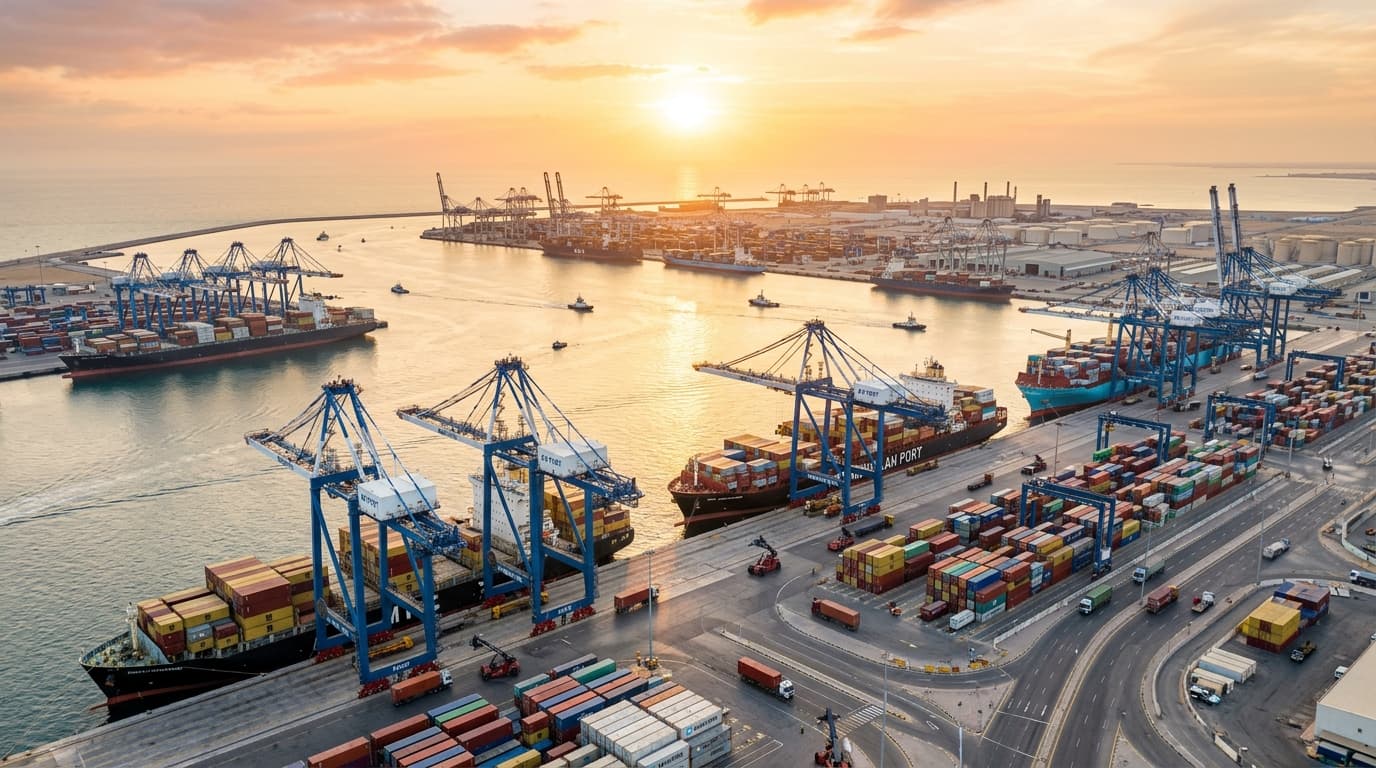
Our routing for sea cargo from eastern Canada runs across the Atlantic and through the Mediterranean and Suez to Jeddah Islamic Port, the Kingdom's main gateway, then by truck or rail to Riyadh or your site. Gulf-coast routings to Dammam are confirmed per booking.
Air cargo lands at King Khalid International Airport in Riyadh. Since 1 December 2025 the Canada–Saudi air agreement allows unlimited all-cargo flights.
- Transport Canada, 1 Dec 2025: expanded air transport agreement with Saudi Arabia
- ZATCA: mandatory pre-arrival customs declaration at seaports (from 29 Oct 2025)
Checked 10 October 2026. Carrier services change; we confirm the routing for each shipment.
Ten questions Canadian exporters ask
| Question | Short answer |
|---|---|
| Do I need a Saudi company? | No. Safe Hands is the importer named on the customs declaration. |
| Who holds the SABER certificates? | The Saudi importer's SABER account: ours, as your IOR. |
| Does a CSA or UL mark replace SABER? | No. Regulated products still need a PCoC. |
| Is there a free trade agreement? | No. The standard duty on the tariff line applies. |
| Is there a tax treaty? | No; negotiations began in July 2026. |
| Do I file anything in Canada? | An export declaration in CERS from CAN $2,000, or for controlled goods. |
| Who pays duty and VAT? | We pay at clearance and invoice them back, usually on DDP terms. |
| Which port? | Jeddah for sea cargo; Riyadh airport for air. |
| Can Health Canada approval help with SFDA? | A Class II–IV licence can support SFDA's reliance route. |
| How is the IOR fee charged? | A percentage of CIF or a flat fee per shipment. |
Related
Sources
- DataSaudi (GASTAT): Saudi Arabia–Canada bilateral trade 2025
- UN Comtrade 2025, Saudi-reported imports from Canada (HS 2-digit)
- Trade Commissioner Service (Canada): Canada's free trade agreements
- Prime Minister of Canada, 9 Jul 2026: Canada–Saudi FIPA and double-taxation negotiations
- ZATCA General Guideline for Withholding Tax (May 2026)
- CBSA: Exporting goods from Canada (export declaration, CERS)
- Canada: Area Control List (SOR/81-543)
- Canada: Export and Import Permits Act (Export Control List)
- SABER: FAQs (PCoC, SCoC, accepted conformity bodies)
- SFDA MDS-G030: Reliance Approach for Medical Devices (9 Sep 2026)
- Health Canada: about medical devices (licences for Class II–IV)
- Transport Canada, 1 Dec 2025: expanded air transport agreement with Saudi Arabia
- ZATCA Import Instructions (FASAH, documents)
- ZATCA: mandatory pre-arrival customs declaration at seaports (from 29 Oct 2025)
- ZATCA: customs service fee 0.15% of CIF, min SAR 15, max SAR 500
- ZATCA Integrated Tariffs (12-digit lines)
- ZATCA Guideline on Imports and Exports under VAT
- GCC Common Customs Law (Bureau of Experts), Arts 2 and 110
Official sources, checked 10 October 2026. General information, not legal or tax advice.
SABER for your shipment
SABER is SASO's platform where product and shipment certificates are registered. What it means for goods you ship to us as your Importer of Record:
Who issues the SABER certificate?
For a regulated product, a conformity body accepted by SASO issues the Product Certificate of Conformity (PCoC), which is then registered on SABER. Certificates from bodies outside the Kingdom count only if the body is on SASO's accepted list. As your Importer of Record, we register the product and its certificates on SABER.
What does each shipment need?
A shipment certificate (SCoC) for every shipment: issued on SABER in 1–2 working days, valid for 90 days, SAR 350 excluding VAT. The PCoC costs SAR 500 excluding VAT on SABER and is valid for one year; the conformity body's own fees are quoted per HS code.
My product has no technical regulation. Does it still go through SABER?
Yes. A non-regulated product still needs product registration on SABER, an importer self-declaration and a shipment certificate for each shipment.
How do I know which approval my product needs?
From its 12-digit tariff line: the Required Procedures of that line in the ZATCA Integrated Tariff state whether it needs a SABER certificate, an SFDA release or another approval. Send us the HS code or a product description and we check it.
Sources: saber.sa (FAQs, services, non-regulated products, shipment certificate); SASO service catalogue; ZATCA Integrated Tariff. Checked 10 October 2026.
Where will your stock sit?
When your goods land, they either clear into the Saudi market straight away or wait under customs control. That choice decides when customs duty and import VAT are paid.
Duty-paid stock in Riyadh
We clear the goods on arrival. Customs duty (the rate of the 12-digit tariff line on the customs value), the 0.15% customs service fee and 15% import VAT are paid on the customs declaration. The stock is then free to sell and ships from our Riyadh warehouse.
Bonded storage
We arrange bonded storage through free-zone and bonded-port facilities. Import VAT is suspended together with customs duty while goods stay in a customs warehouse and falls due when they are released into the Saudi market; ZATCA may ask for a guarantee for that amount. Our licensed customs team clears each release.
How bonded storage worksSources: ZATCA Guideline on Imports and Exports under VAT (Second Edition, May 2026), sections 4.1–4.4 and 5.2; ZATCA customs service fee (from 6 October 2024). Checked 11 October 2026.
Store with us
Keep your stock in the Kingdom with the same team that imports and clears it.
- Storage in Riyadh: duty-paid in our warehouse, or bonded through free-zone and bonded-port facilities
- Pick, pack and order preparation
- B2B distribution across the Kingdom
- One partner from customs clearance to delivery
Frequently Asked Questions
QCan a Canadian company import into Saudi Arabia without a Saudi entity?
Yes. Safe Hands acts as Importer of Record: Safe Hands is the importer named on the customs declaration and you sell on DDP terms to your Saudi buyer.
QIs there a free trade agreement between Canada and Saudi Arabia?
No. Canada has no free trade agreement with Saudi Arabia or the GCC, so Canadian-origin goods pay the standard duty on their 12-digit Saudi tariff line, plus 15% import VAT.
QIs there a Canada–Saudi income tax treaty?
No treaty is in force; negotiations were launched in July 2026. Saudi payments to Canadian firms for services therefore face withholding tax at the domestic rates: 5% technical and consulting, 15% royalties, 20% management fees, 15% other payments.
QWhat do I file on the Canadian side?
An export declaration, usually in CERS, for commercial goods of CAN $2,000 or more and for controlled goods at any value: at least 48 hours before loading by sea, 2 hours by air. Check whether your goods are on Canada's Export Control List; most commercial goods are not.
QDoes a CSA, UL or ISED marking replace the SABER certificate?
No. A CSA, UL or ISED marking is not a SABER certificate. Regulated products still need a PCoC from a SASO-accepted conformity body; existing test reports may reduce testing.
QHow are Canadian wireless and IT devices certified for Saudi Arabia?
ICT and radio devices need a Type 1a conformity certificate from a SASO-accepted body, issued in SABER. The certificate route for wireless devices is SABER, not a separate portal, and the device must meet CST technical specifications. An ISED certification is a Canadian market approval.
QCan a Health Canada licence help with SFDA medical device approval?
It can. SFDA's reliance guidance MDS-G030 (9 September 2026) lists Health Canada among its reference authorities, with a 35–60 working-day review for an identical device. Health Canada licences Class II–IV devices. The SFDA marketing authorisation is filed by the manufacturer or its licensed Saudi Authorised Representative.
QDo you import Canadian pharmaceuticals?
Pharmaceuticals follow SFDA rules and are handled with an SFDA-licensed partner.
QWho holds the SABER account and certificates?
We do, as your Importer of Record. Foreign exporters have no direct access to SABER, so the certificates sit in our account.
QHow is import VAT calculated?
At 15% of the customs value plus duty and other charges on the declaration, including ZATCA's 0.15% customs service fee (minimum SAR 15, maximum SAR 500). It is paid at clearance with the duty.
QWhich documents does Saudi customs need for a Canadian shipment?
The commercial invoice, the bill of lading or air waybill, the approvals your tariff line lists (such as the SABER shipment certificate), a packing list, and a certificate of origin where origin is unclear or a preference is claimed.
QWhich Saudi port do Canadian shipments use?
Our routing for sea cargo from eastern Canada runs to Jeddah Islamic Port; Gulf-coast routings are confirmed per booking. Air cargo lands at King Khalid International Airport in Riyadh.
QHow is the Importer of Record fee charged?
Either as a percentage of the CIF value or as a flat fee per shipment, depending on the shipment value. Duties and 15% VAT are paid at clearance and invoiced back with the fee, usually on DDP terms.
QAre you a licensed customs broker?
Yes. Safe Hands is a licensed customs broker; the declaration is filed by our own licensed team.
Our credentials
- Licensed customs broker
- ZATCA customs clearance
- TGA Freight Forwarder & Broker Licence
- 42/00008120
- ISO certification
- ISO 9001:2015 AMER300621 · ISO 45001:2018 AMER300622
- Verify · Certification body's certificate check
- Head office · Warehouse
- 7273 Fatimah Al Zahraa Rd, Riyadh 12837 · Al Sulay industrial district, Riyadh
Safe Hands Shipping Line is the trade name of شركة الايدي الامينة (Al Aidi Al Amina Company). All credentials →
Start exporting from Canada to Saudi Arabia
Get an Importer of Record quote for your next shipment from Canada.