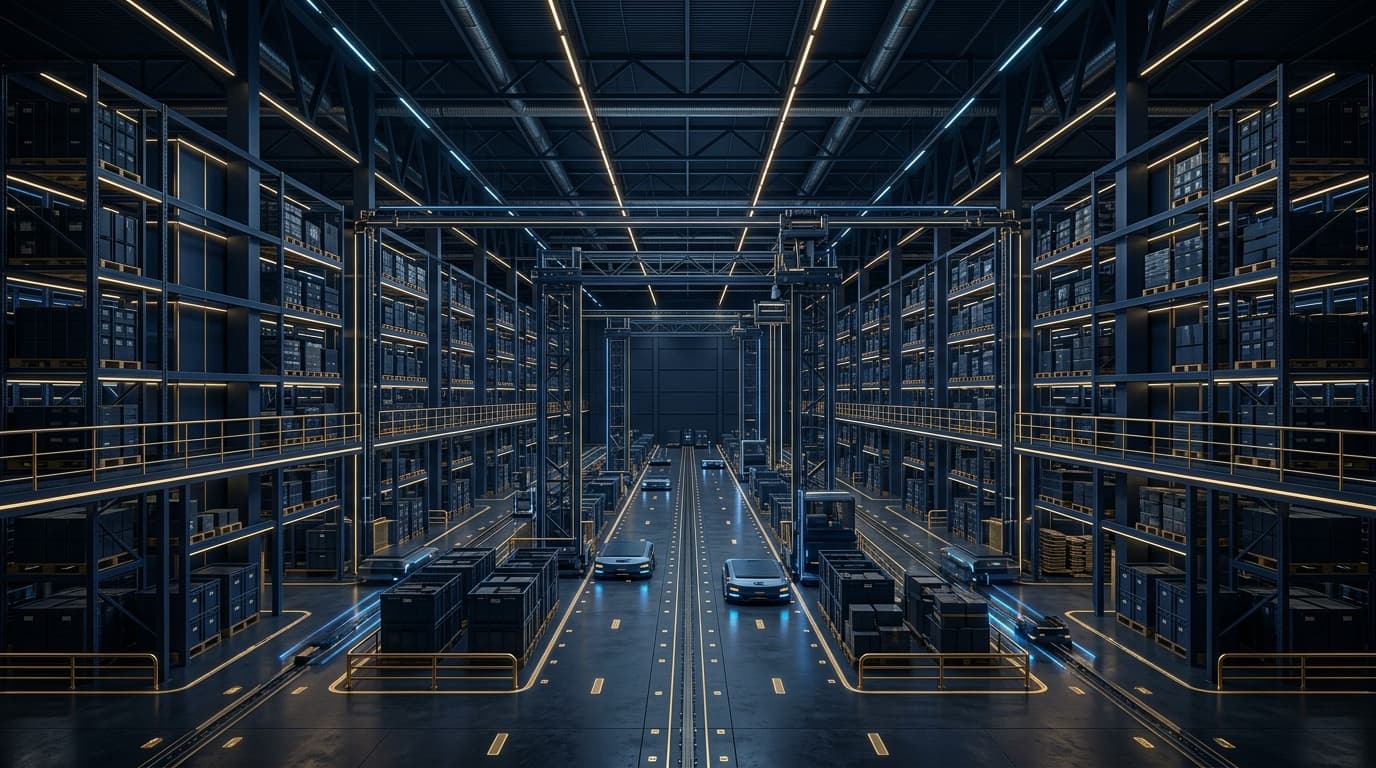
Warehousing and Logistics in Saudi Arabia under Vision 2030
Industrial growth in Riyadh, Jeddah and the Eastern Province is pushing traditional storage past its limits. Here is how port expansion, logistics zones and third-party warehousing are reshaping commercial distribution in the Kingdom.
Quick answer
What does Vision 2030 mean for warehousing imported goods in Saudi Arabia?
The National Industrial Development and Logistics Program under Vision 2030 targets a place among the top ten global logistics markets by 2030, through investment in port terminals, dry ports and logistics zones. For importers that means more port capacity at Jeddah and Dammam, rail from Dammam to Riyadh Dry Port, and bonded options in logistics and special economic zones where duty and VAT fall due on exit to the domestic market. Safe Hands Shipping Line offers ambient B2B storage for general commercial goods in Al Sulay, Riyadh; temperature-controlled, food and medical requirements are reviewed by our team before we quote. We arrange bonded storage through free-zone and bonded-port facilities.
Commercial freight volumes through Saudi ports and airports have expanded rapidly over the past five years. Importers who once stored inventory in basic sheds in older districts now face stricter Civil Defence rules, rising commercial rents and tighter delivery windows from retail and project buyers. Keeping cargo protected and ready for scheduled dispatch across Riyadh, Jeddah and the Eastern Province requires modern racked facilities and direct links to the main highway corridors.
The National Industrial Development and Logistics Program (NIDLP) set a clear target: Saudi Arabia among the top ten global logistics markets by 2030. Meeting it involves major public investment in port terminals, dry ports and designated logistics zones. For trading companies and manufacturers, these upgrades change how commercial storage, freight forwarding and local distribution operate across the Kingdom.
Port expansion and Riyadh Dry Port
Cargo historically moved through concentrated bottlenecks at port gates. Today, expanded container berths at Jeddah Islamic Port and King Abdulaziz Port in Dammam handle more vessel calls per week. Rail moves containers from Dammam directly to Riyadh Dry Port without adding heavy truck traffic to the coastal highways. Logistics zones and special economic zones offer bonded storage where duty and the 15% VAT become due only when goods exit to the domestic market.
| Logistics hub | Primary role | Operational advantage |
|---|---|---|
| Riyadh Dry Port and Al Sulay | Central Kingdom distribution | Rail link from Dammam; direct access to the ring-road network |
| Jeddah Islamic Port | Red Sea gateway | Largest share of maritime imports; close to Makkah, Madinah and the Western Region |
| King Abdulaziz Port, Dammam | Gulf and industrial gateway | Shortest route from China and India; Jubail and the Eastern Province |
| Logistics zones and special economic zones | Duty-deferred bonded storage | Duty and VAT paid on exit to the domestic market; we arrange bonded storage through free-zone and bonded-port facilities |
Private warehouse or a 3PL provider?
Expanding businesses in Saudi Arabia must decide whether to lease and staff their own facility or contract an established third-party logistics provider. Building out a private warehouse in prime industrial districts such as Al Sulay or Al Kharj Road in Riyadh requires significant upfront capital: heavy-duty racking, electric forklifts, fire suppression to Civil Defence code, and trained staff. For companies with fluctuating seasonal demand, those fixed monthly costs squeeze cash flow.
| Operational factor | Private warehouse | Safe Hands 3PL storage |
|---|---|---|
| Capital expense | High: lease deposit, racking, equipment, WMS | None: monthly fee per pallet position or square metre |
| Capacity flexibility | Fixed floor area; you pay for empty space in slow months | Scale pallet positions up or down with inventory |
| Licensing and permits | You manage Balady and Civil Defence permits | Established facility licensed for dry storage |
| Customs integration | Separate contracts with a broker and a haulier | Clearance, transport and receiving under one point of contact |
| Workforce | Hiring, training and Saudisation quotas | Operating team already on site |
Contracting an established provider turns rigid property costs into a flexible operating expense. Pricing and cargo categories are on dry storage in Riyadh.
From the port gate to the warehouse rack
A modern warehouse adds value only when incoming containers clear the port gate without administrative delay. Demurrage accumulates fast when the customs broker, the haulier and the warehouse operate as separate parties. With us, the declaration is lodged on FASAH before the vessel berths, the container is cleared by Safe Hands, a licensed customs broker, and a truck moves the container to our Riyadh warehouse on release. There it is destuffed under our inspector: the seal is photographed before opening, the goods are checked line by line against the packing list, and any shortage or damage is reported before put-away.
Details on receiving and inspection and import distribution.
Checklist for choosing a storage partner
Location
Close to arterial roads such as the Riyadh Eastern Ring Road, to work around peak-hour truck bans.
Compliance
A valid Civil Defence permit, municipal registration, and clarity on whether the facility is licensed for dry storage only or for other categories.
Security
24-hour guarding, perimeter fencing, CCTV, and caged areas for high-value goods.
Integration
One provider managing sea import, clearance, port drayage and palletised storage.
What we store, and what our team reviews before we quote
Our warehouse in Al Sulay, Riyadh, is ambient, room-temperature storage: building materials, machinery and spare parts, furniture and wood products, tyres, packaging, cartons and plastics, electronics in caged areas, and project and FF&E materials. Temperature-controlled, food, medical, cosmetics and chemical requirements are reviewed by our team before we quote, with the applicable licence position confirmed before we commit. We arrange bonded storage through free-zone and bonded-port facilities.
We reply within minutes on WhatsApp.
Saudi warehousing rules and our scope at a glance
| Item | Detail | Source |
|---|---|---|
| Our storage | Ambient, room-temperature storage for general commercial goods in Al Sulay, Riyadh | Safe Hands service scope |
| Reviewed by our team before we quote | Temperature-controlled, food, medical, cosmetics and chemical requirements, with the applicable licence position confirmed before we commit | Safe Hands service scope |
| Receiving | Seal photographed before opening, destuffing under our inspector, line-by-line check against the packing list | Safe Hands service scope |
| Included with storage | Receiving, put-away and inventory reporting | Safe Hands service scope |
| Customs warehouses (Saudi rule) | Set up by Minister decision; goods may be stored there with duty unpaid under the Director General's rules, and customs supervises warehouses run by other bodies | ZATCA, Customs Law Arts 74-76 · verified on 4 Oct 2026 |
| Deposit (bonded) zones (Saudi rule) | Goods are held with customs duty, VAT and excise suspended, in zones run by a ZATCA-licensed operator under ZATCA supervision | ZATCA, Deposit Zone Rules Arts 1, 3, 4 · verified on 4 Oct 2026 |
| Deposit zone storage period (Saudi rule) | Up to 5 years from the approved entry form; ZATCA may shorten this for perishable goods or extend it once for a similar period on a reasoned request | ZATCA, Deposit Zone Rules Arts 12, 13 · verified on 4 Oct 2026 |
| Importer label (Saudi rule) | Where a SASO technical regulation requires it, products carry an Arabic label with the importer's name and commercial registration, applied before loading at origin | SASO / SABER circular on supplier name and CR · verified on 1 Oct 2026 |
| Customs records (Saudi rule) | Everyone involved keeps the original customs documents for 5 years from the declaration date; electronically archived documents carry the force of originals | ZATCA, Customs Procedures Controls Art 4; Customs Law Arts 115, 127 · verified on 4 Oct 2026 |
From the port gate to the warehouse rack, step by step
| Step | What happens | What you receive |
|---|---|---|
| 1. Declaration | The customs declaration is lodged on FASAH before the vessel berths | Declaration reference |
| 2. Clearance | Cleared by Safe Hands, a licensed customs broker | Release of the container |
| 3. Drayage | A truck moves the container to our Riyadh warehouse on release | Arrival and seal photographs |
| 4. Receiving | The container is destuffed under our inspector, with the seal photographed before opening | A condition record of the container and seal |
| 5. Check | Goods are checked line by line against the packing list | A report of any shortage or damage before put-away |
| 6. Put-away and storage | Goods are stored on pallets or floor space with location codes | Inventory reporting |
| 7. Release and delivery | Goods are released in phases to your sites or customers | A movement report for each release |
Warehousing Quote
Size the warehouse space and storage conditions for your products in Saudi Arabia. Instant estimate for dry and general goods; our team quotes food, medical, cold chain, chemicals, batteries and special cases.
Warehousing QuoteRequest a storage rate for Riyadh
Send the approximate pallet count or floor area, the cargo type and the storage period. We reply within minutes on WhatsApp.
Frequently Asked Questions
QWhat is the NIDLP and why does it matter for importers?
The National Industrial Development and Logistics Program is the Vision 2030 programme that targets placing Saudi Arabia among the top ten logistics markets in the world by 2030. For importers it means expanded port capacity, rail from Dammam to Riyadh Dry Port, and new logistics zones that shorten the path from port to warehouse.
QWhere is the best place to store imported goods for distribution across Saudi Arabia?
Riyadh. It sits at the centre of the road network, receives containers from both Dammam and Jeddah, and serves the largest consumer and project market. Our warehouse is in the Al Sulay industrial district with direct access to the ring roads.
QIs 3PL warehousing cheaper than leasing my own warehouse?
For most importers with variable volumes, yes. You pay per pallet position or per square metre per month, with receiving, put-away and inventory reporting included, instead of financing a lease deposit, racking, forklifts, staff and permits for space you may not fill every month.
QDo you offer temperature-controlled or bonded storage?
Our own Riyadh warehouse is ambient, room-temperature storage for general commercial goods. We arrange bonded storage through free-zone and bonded-port facilities. Temperature-controlled, food and medical requirements are reviewed by our team before we quote, with the applicable licence position confirmed before we commit.
QCan my container go straight from the port to your warehouse?
Yes. The customs declaration is lodged on FASAH before the vessel berths, the container is cleared by Safe Hands, a licensed customs broker, and a truck moves the container to Riyadh on release. It is destuffed under our inspector with the seal photographed before opening.
QWhat is a customs warehouse in Saudi Arabia?
A warehouse, inside or outside a customs office, set up by Minister decision under the GCC Common Customs Law (Arts 74-76). Goods may be stored there with duty unpaid under the Director General's rules, and customs supervises warehouses run by other bodies.
QWhat is a deposit (bonded) zone?
Under ZATCA's Deposit Zone Rules, it is an area where goods are held with customs duty and indirect taxes (VAT and excise) suspended. It is run by a ZATCA-licensed operator under ZATCA supervision and created by Governor decision, inside or outside a customs office.
QHow long can goods stay in a deposit zone?
Up to 5 years from the approved entry form. ZATCA may shorten this for perishable goods or extend it once for a similar period on a reasoned request, and goods may move between deposit zones and other duty-suspended areas without paying duty (Deposit Zone Rules Arts 12 and 13).
QWhat label should imported products carry?
Where a SASO technical regulation requires it, products carry an Arabic label with the importer's name and commercial registration, applied before loading at origin. Confirm this with your supplier before the goods ship.
QHow long must import documents be kept?
Under the Saudi Customs Procedures Controls (Art 4) and the Customs Law (Arts 115 and 127), everyone involved keeps the original customs documents for 5 years from the declaration date, and electronically archived documents carry the force of originals.
QHow do I get a warehouse estimate in Riyadh?
Use the online warehouse quote request: tell us the product, quantity and storage period, and the team sends a written quotation. You can also send the same details to our warehouse team on WhatsApp.
Sources
- ZATCA — GCC Common Customs Law and Implementing Regulations (Saudi consolidated text) — Arts 74-76 (customs warehouses), 115 and 127 (records). Verified on 4 Oct 2026.
- ZATCA — Customs Procedures Controls (Administrative Decision 28624, as amended) — Art 4 (keeping original documents for 5 years). Verified on 4 Oct 2026.
- ZATCA — Deposit (Bonded) Zone Rules (Administrative Decision 28918, as amended in 1448H) — Arts 1, 3, 4, 12 and 13. Verified on 4 Oct 2026.
- SASO / SABER — Circular on supplier name and CR on the product — Arabic label with the importer's name and CR where the technical regulation requires it. Verified on 1 Oct 2026.
The Saudi rules above are summarised for planning. The requirements for your specific product are confirmed when we review your shipment.